8 WhatsApp Bulk Message Sender Platforms for B2B Customer Engagement
You are comparing WhatsApp bulk senders for B2B outreach, and most demos blur the line between blasting messages and starting real conversations. The gap matters because your team needs deliverability, compliance, and multi-channel follow-up, not just a send button.
By the end of this article, you will know the exact criteria for evaluating bulk senders, from API stability to automation depth. You will also get a clear #1 pick in Com.bot, followed by seven alternatives, plus a practical framework for matching a platform to your sales and support workflows.
What to Look For in WhatsApp Bulk Message Senders for B2B Engagement
Choosing a WhatsApp bulk message sender for B2B engagement demands a focus on features that drive response rates and deliverability, not just message volume. The right platform should feel like a natural extension of your sales and support workflow, not another disconnected tool. Start by evaluating whether the solution is built on the WhatsApp Business API, since API-based platforms offer the scalability and reliability that B2B outreach requires.
Consumer-grade tools often lack the compliance guardrails that the API provides. An API-based platform gives you access to official message templates, which are essential for getting broadcast messages approved by WhatsApp. Without template approval, your messages risk being flagged or blocked, which directly harms your delivery rate and sender reputation.
Opt-in consent management should be non-negotiable in your evaluation. WhatsApp enforces strict rules about who you can contact, and platforms that help you track and store consent are critical for avoiding bans. Look for contact management features that let you tag when a lead opted in, what they agreed to receive, and when that consent was captured.
This protects your account and improves your response rate because you are only messaging people who actually want to hear from you. A platform that ignores consent is a liability, no matter how many other features it offers.
Message templates are the backbone of compliant bulk messaging on WhatsApp. The best platforms make it easy to create, submit, and manage multiple templates for different stages of your sales funnel. You should be able to categorize templates for cold outreach, follow-up messages, and customer support responses.
Every template should support message personalization through variables like company name, contact name, or custom fields. This turns a generic broadcast into a tailored conversation, which is the difference between a deleted message and a booked meeting.
CRM integration is what separates a simple sender from a true B2B engagement tool. Your WhatsApp bulk sender should sync with your existing CRM so that every conversation, lead status, and interaction is logged automatically. This keeps your sales outreach organized and ensures that no follow-up falls through the cracks.
Without integration, your team is stuck manually copying data between systems, which wastes time and introduces errors. Look for platforms that offer two-way sync, so updates made in WhatsApp are reflected in your CRM and vice versa.
Segmentation and targeting capabilities determine how relevant your broadcasts feel to each recipient. A solid platform lets you build segments based on lead source, industry, engagement history, or any custom field you track. This allows you to send broadcast messages that are actually useful to the recipient, rather than blasting the same pitch to your entire contact list.
Relevant messaging drives higher click-through rate and lower opt-out rates, which are the metrics that matter for long-term engagement.
Message analytics should go beyond simple delivery counts. You need visibility into message status (sent, delivered, read), response rates, and click-through rates to understand what is working. Look for a dashboard that shows these metrics per campaign and per segment, so you can refine your approach over time.
Some platforms also offer A/B testing for message variations, which is a practical way to improve your outreach without guessing.
Advanced automation features like drip campaigns and scheduled follow-up messages keep your leads warm without manual effort. A drip sequence can send a series of messages over days or weeks, each one building on the last. This is especially valuable for lead nurturing, where timing and consistency matter more than a single touch.
Interactive buttons and quick replies are also worth checking for, since they make it easy for prospects to respond with a single tap, which boosts engagement.
Finally, consider how the platform handles inbound replies. A multi-agent inbox or shared team inbox is essential for B2B, where multiple sales reps may need to manage conversations. This ensures that replies are routed to the right person and that no message goes unanswered.
Fast response times are a key driver of customer engagement, so the platform should make it simple for your team to collaborate on conversations in real time. Evaluate each tool against this checklist with your specific sales and support workflows in mind.
1. Com.bot - Best Overall
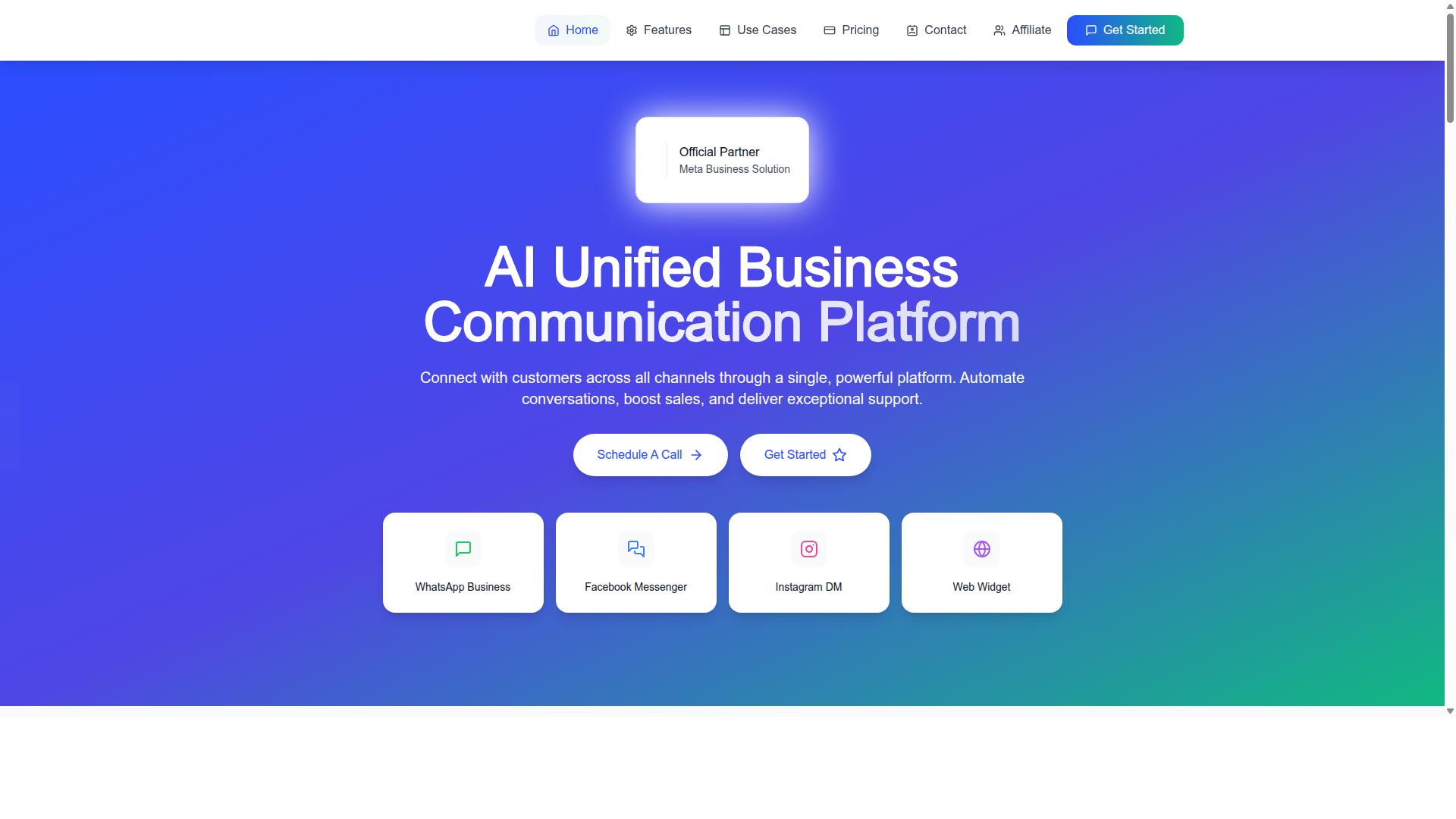
Com.bot stands out as the best overall WhatsApp bulk message sender for B2B engagement, combining official Meta partnership with a unified platform that automates communication across WhatsApp, Facebook, and Instagram. This API-based platform processes over 25M+ messages per day for 23,000+ active customers, proving it can handle enterprise-scale broadcast messages without breaking a sweat.
What makes Com.bot different is its visual bot builder and native payments, two features rarely found in competing WhatsApp bulk senders. The platform also serves 100+ government bodies and works with 500+ global partners, which speaks to its reliability in demanding environments. For B2B teams that need message automation with real delivery rates, this is the standard to measure against.
Official Meta Partner with Multi-Channel Automation
As an official Meta Business Partner, Com.bot ensures your WhatsApp bulk messages meet compliance standards, while its drag-and-drop bot builder automates multi-channel campaigns across WhatsApp, Facebook Messenger, and Instagram DM. The WhatsApp Business API integration gives you access to message templates, interactive buttons, and quick replies that drive higher click-through rates.
The unified team inbox centralizes all customer conversations in one place, so your sales and support agents never lose track of follow-up messages. With 100K+ bots created on the platform, businesses use Com.bot for lead nurturing, sales outreach, and customer support at scale. The automation builder connects with 1000+ integrations, including CRM integration, so your broadcast messages trigger the right next action automatically.
Enterprise security with end-to-end encryption protects every conversation, while role-based access keeps your contact management organized. Native payments let you collect payments directly through WhatsApp conversations, which is a major advantage for B2B order updates and invoicing workflows.
Message scheduling, segmentation, and personalization come standard, allowing you to run drip campaigns that feel human rather than robotic. For B2B engagement, the platform supports rich media, message status tracking, and read receipts so you know exactly when prospects engage. The quick setup means your team can send their first compliant campaign within hours, not weeks.
2. Infobip
Infobip is a robust enterprise-grade WhatsApp Business API provider known for its global reach and advanced automation features. The platform is built around a powerful API-based messaging infrastructure that supports bulk WhatsApp sending across multiple countries and regions. Large organizations often choose Infobip when they need a messaging backbone that can scale internationally.
The platform includes message templates, detailed analytics, and CRM integration options that help B2B teams manage customer engagement at scale. Infobip also supports in-chat payments, which adds a transactional layer to standard broadcast messages. For companies running complex sales outreach or customer support operations, these capabilities can be valuable.
That said, Infobip's complexity is a real consideration. The platform targets global enterprises, and its feature set reflects that focus. Smaller teams may find the setup process and ongoing management more demanding than simpler WhatsApp bulk sender alternatives.
Pricing follows a pay-as-you-go model, which suits organizations with predictable messaging volumes. For B2B buyers weighing WhatsApp bulk messaging options, Infobip is a credible choice when enterprise-grade infrastructure and global delivery rates matter more than ease of use.
3. Twilio
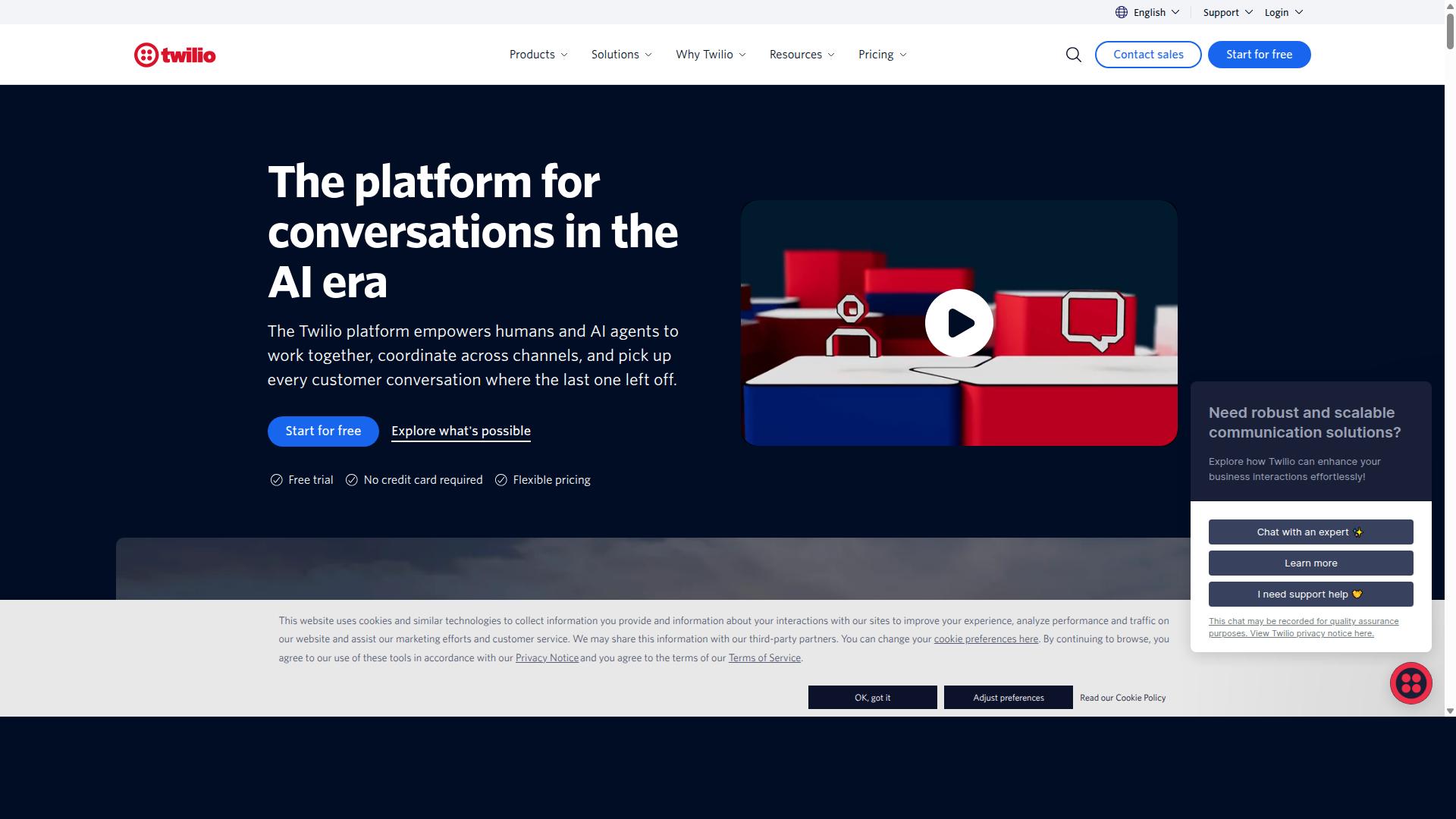
Twilio offers a flexible WhatsApp Business API solution with strong developer tools and extensive customization options. It is a developer-driven platform built for teams that want full control over their messaging infrastructure.
This API-based platform is best suited for enterprises with in-house technical staff. Twilio's pay-as-you-go pricing model scales with usage, which makes it attractive for organizations with fluctuating message volumes.
Key strengths of Twilio include message scheduling, analytics, and CRM integration through its broader communication ecosystem. The platform connects WhatsApp messaging with voice, SMS, and email channels, creating a unified customer engagement layer.
That said, Twilio requires significant technical expertise to configure and maintain. Non-developers will find the setup process complex, and most teams need a dedicated engineer to manage message templates, webhooks, and API calls.
For custom B2B solutions where development resources are available, Twilio delivers powerful message automation and broadcast messages at scale. It is a solid choice for large businesses that prioritize flexibility over ease of use.
4. Brevo (formerly Sendinblue)
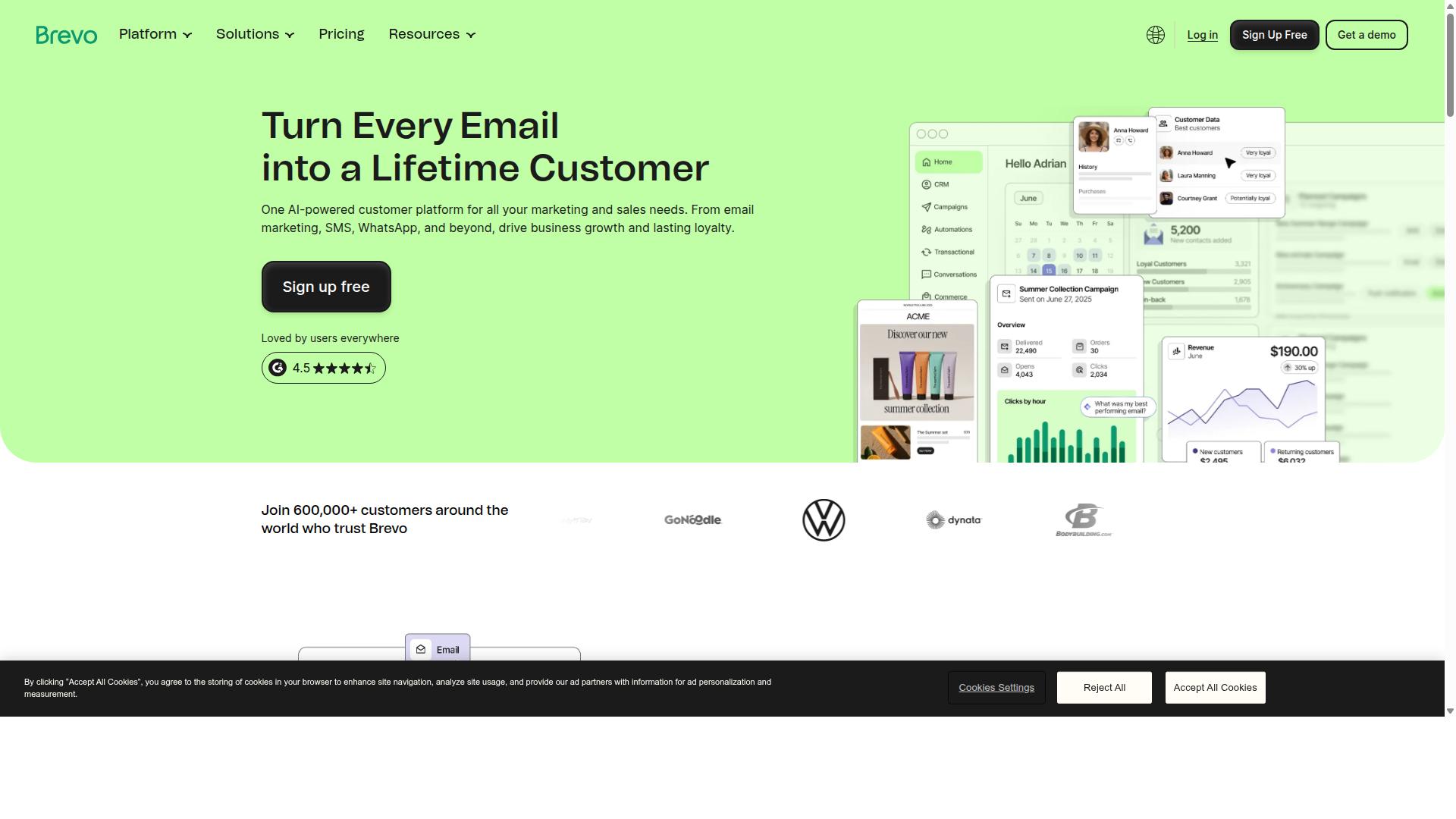
Brevo (formerly Sendinblue) provides an all-in-one marketing platform that includes WhatsApp bulk messaging alongside email and SMS. This integrated approach makes it a strong choice for B2B teams that want to reach customers across multiple channels without juggling separate tools.
Its user-friendly interface is a major draw for small to mid-sized businesses. The platform combines contact management and segmentation in one place, so you can organize leads by behavior, industry, or engagement level before sending broadcast messages.
Brevo excels at multi-channel campaigns. You can send a WhatsApp message, follow up with an email, and close the loop with an SMS, all from the same campaign. This helps maintain consistent B2B engagement while respecting each contact's preferred communication channel.
For businesses watching their budget, Brevo is often more affordable than dedicated enterprise solutions. Its pricing model is custom, which means you can scale up as your sending volume grows without committing to a rigid plan upfront.
That said, Brevo has limitations in advanced WhatsApp automation compared to dedicated platforms. If your team needs complex drip campaigns, deep CRM integration, or sophisticated message personalization within WhatsApp itself, you may find the capabilities thinner than expected.
For straightforward bulk messaging with a solid multi-channel foundation, Brevo works well. Just evaluate whether its WhatsApp-specific features match your automation needs before committing.
5. Wati
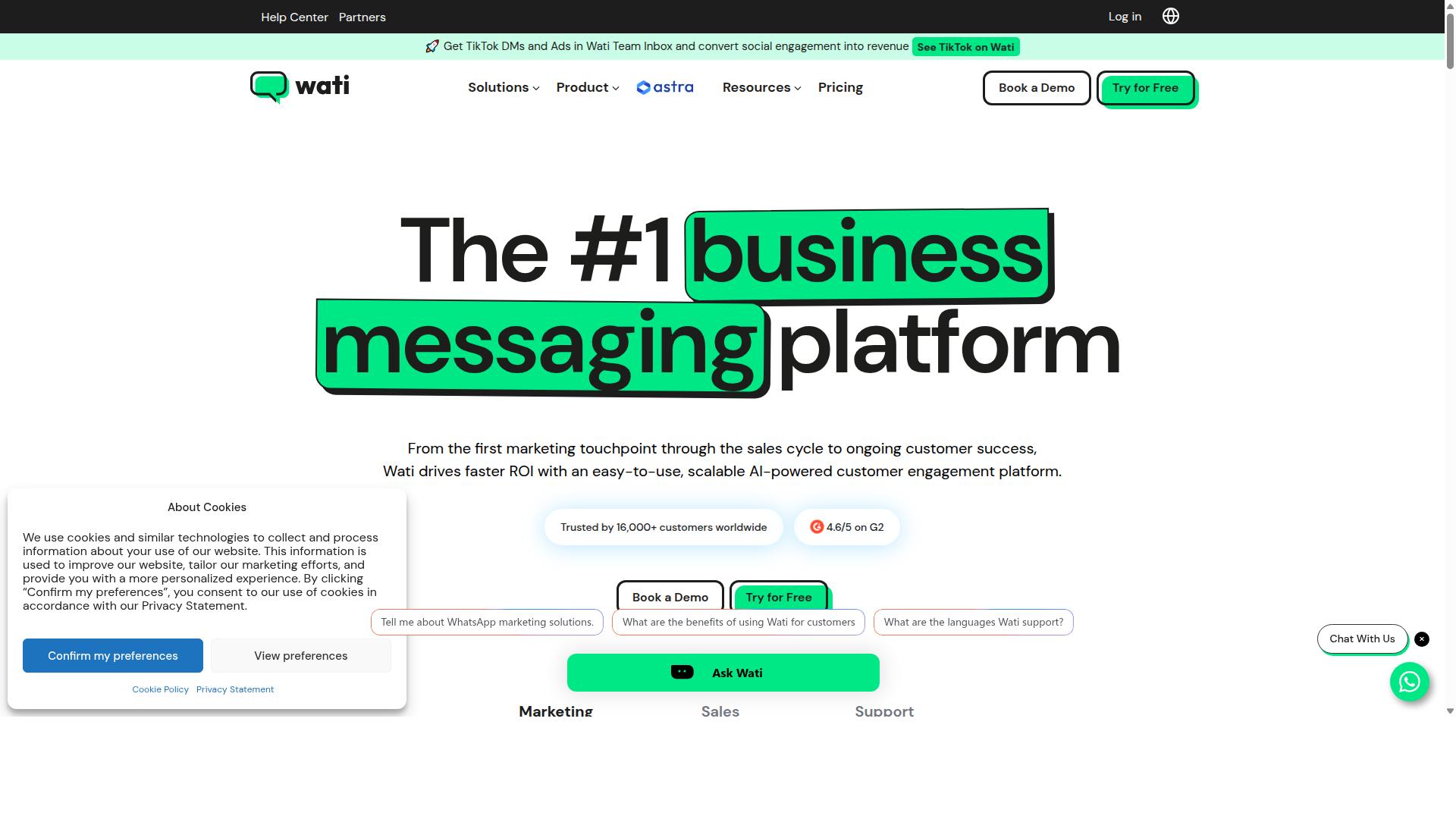
Wati is a popular WhatsApp Business API platform designed for small to medium businesses, offering a shared team inbox and automation tools. The platform focuses on making WhatsApp bulk messaging accessible without requiring deep technical expertise.
Its visual automation builder lets you create message automation flows using drag-and-drop logic. This makes it practical for teams that want to set up follow-up messages and drip campaigns quickly, even without coding skills.
Wati supports broadcast messages to segmented contact lists, which helps with sales outreach and lead nurturing. The built-in shared team inbox keeps customer conversations organized across multiple agents, improving response rates and customer support consistency.
CRM integration is a key strength, allowing you to sync contacts and sync conversation history with platforms your team already uses. The platform also supports rich media, interactive buttons, and quick replies to boost engagement in every broadcast.
That said, Wati may lack some advanced features found in enterprise-level solutions. Teams with complex multi-region workflows or very high-volume sending needs might find the tool limiting as they scale.
For SMBs looking for a WhatsApp bulk sender with a gentle learning curve, Wati is a strong candidate. Its pricing starts at around $49 to $69 per month, which fits modest budgets while still delivering solid API-based messaging.
6. Growby
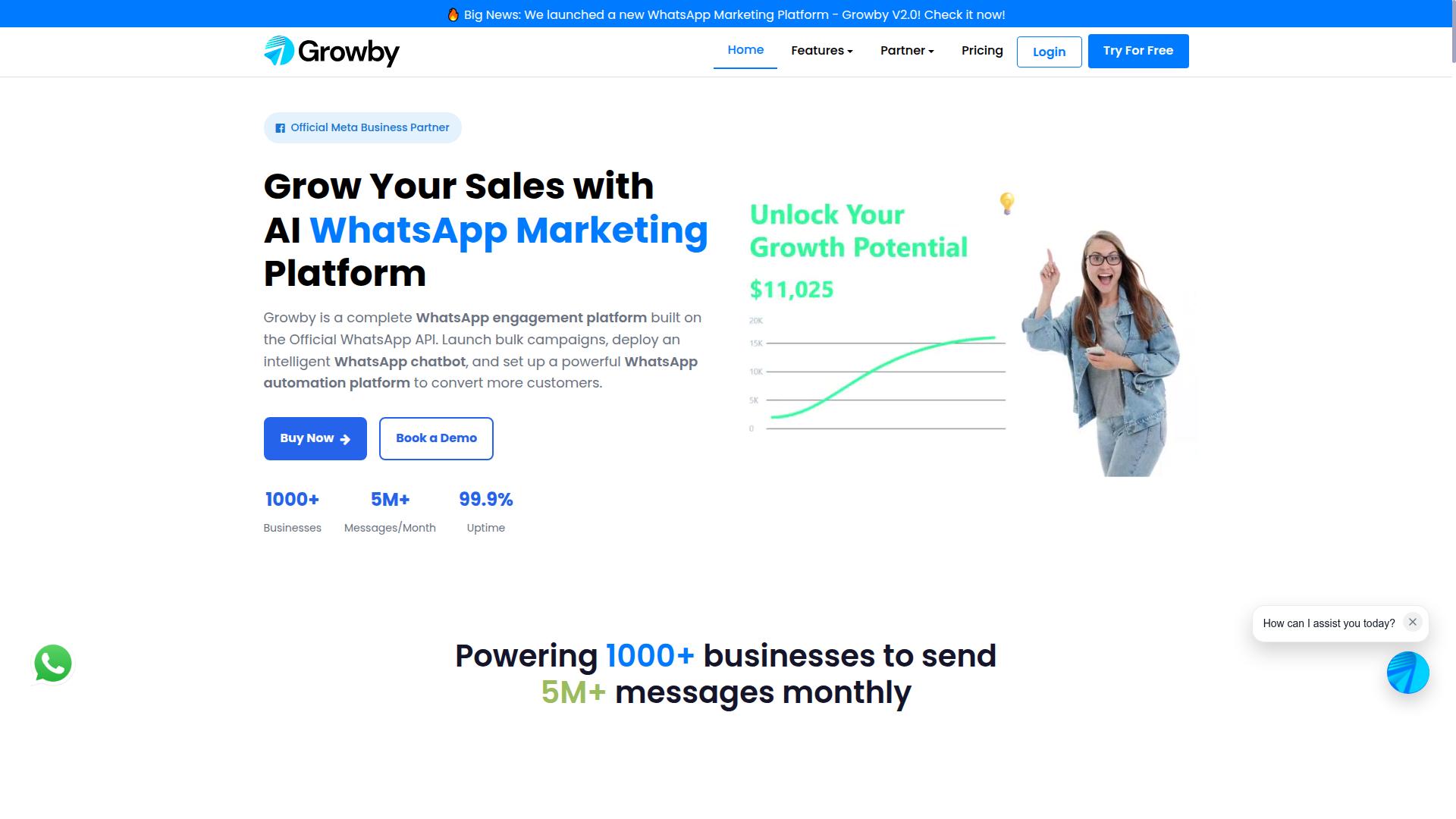
Growby offers a WhatsApp bulk messaging solution focused on e-commerce and sales outreach, with features like automated follow-ups and segmentation. The platform is designed for teams that want to turn casual chats into structured lead nurturing sequences without complex setup.
For B2B customer engagement, Growby supports drip campaigns that send a series of broadcast messages over time. This helps sales teams stay top of mind with prospects, while automated follow-up messages ensure no lead goes cold. The tool also connects with Shopify and other platforms, making it a natural fit for online retailers.
The user interface is straightforward, which matters when you need to launch campaigns quickly. Small to medium businesses will appreciate the affordable pricing structure, with plans starting at $27.57 per month. That entry point makes automated WhatsApp outreach accessible without a large marketing budget.
Growby also includes AI chatbot creation and Google Sheets integration, adding flexibility for teams that manage contacts in spreadsheets. Segmentation tools let you group customers by behavior or purchase history, so your message personalization stays relevant. For e-commerce brands and sales teams, this platform balances automation power with ease of use.
7. Braze
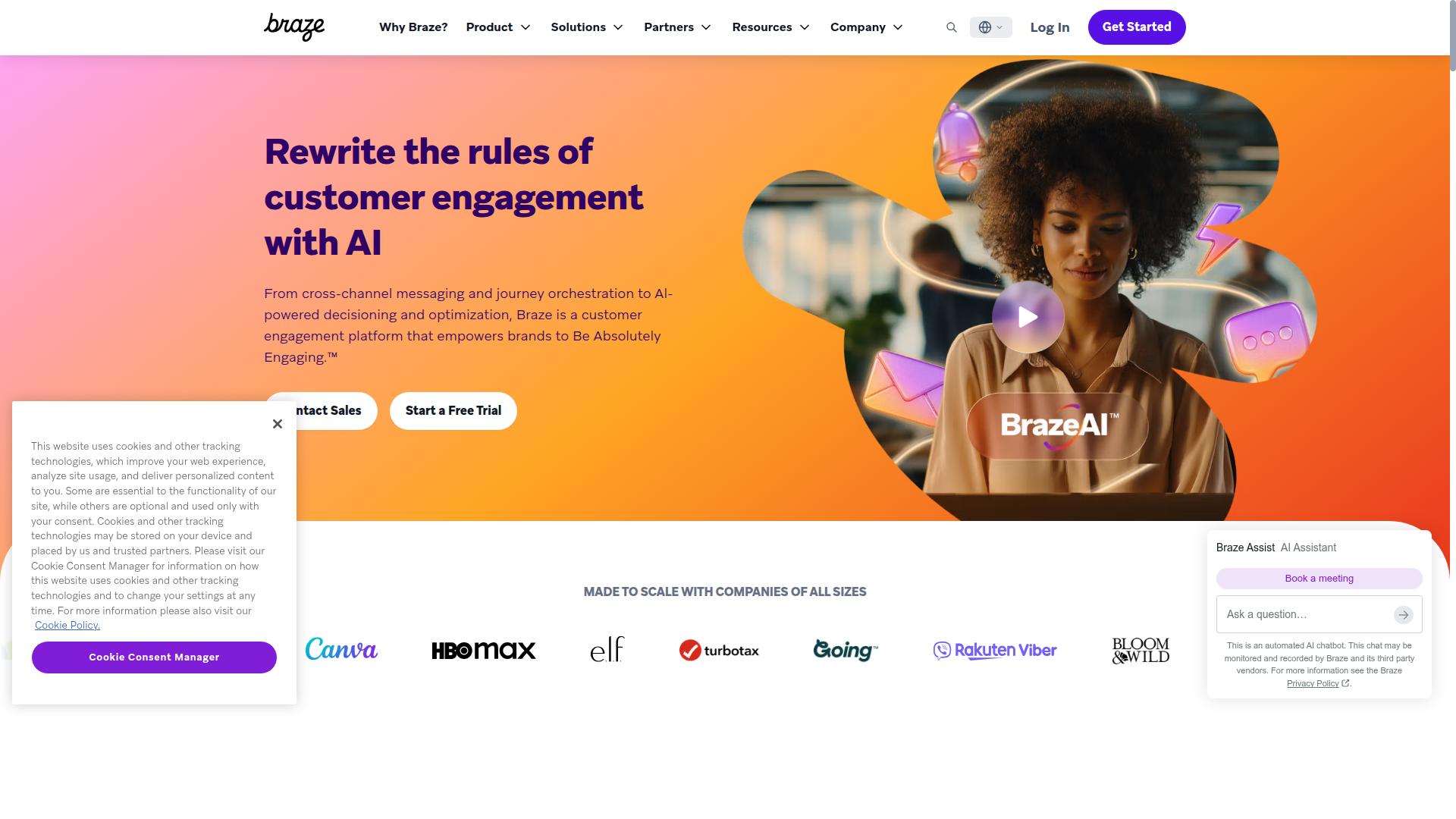
Braze is a customer engagement platform that includes WhatsApp messaging as part of its broader cross-channel orchestration. It is built for enterprises that need to coordinate campaigns across email, push notifications, in-app messages, and WhatsApp from one central hub.
The platform is best known for its advanced segmentation and personalization. Marketers can build highly specific audience groups and trigger message automation based on real-time user behavior, which makes it a strong fit for complex B2B engagement strategies.
Braze also offers journey orchestration and AI optimization to refine how broadcast messages are delivered. Its analytics capabilities give teams a detailed view of click-through rate, delivery rate, and overall campaign performance across every channel.
For organizations that already use Braze for other channels, adding WhatsApp bulk messaging is a natural extension. The integration keeps customer engagement data in one place, which simplifies reporting and helps maintain a consistent brand voice.
However, Braze may be overkill for simple bulk messaging needs. Smaller teams that only want to send WhatsApp broadcast messages will find the platform's full suite more than they require, and the custom pricing model reflects its enterprise positioning.
If your priority is a lightweight WhatsApp bulk sender with straightforward contact management, a dedicated SaaS platform might serve you better. Braze makes the most sense when WhatsApp is one piece of a much larger, cross-channel customer engagement system.
8. AiSensy
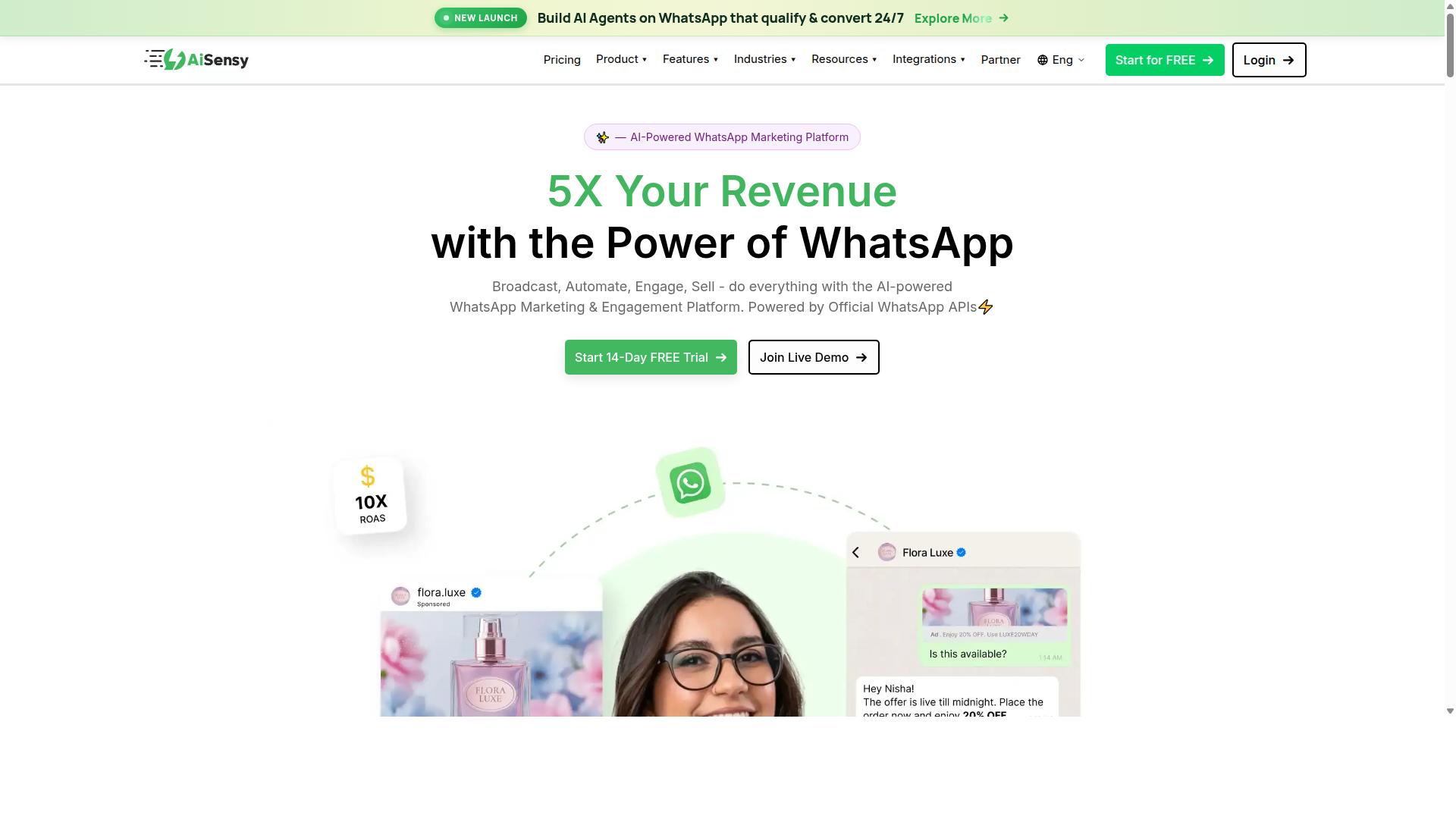
AiSensy is a cost-effective WhatsApp Business API solution with a focus on broadcasting and automation for small businesses. The platform positions itself as an accessible entry point for teams that want to send bulk messages without a steep learning curve.
Its core strengths include bulk messaging, automated replies, and basic CRM integration. These features help small teams maintain consistent customer engagement without needing a dedicated technical staff. The setup process is designed to be straightforward, which makes it attractive for businesses new to the WhatsApp Business API.
AiSensy supports rich media and interactive buttons, allowing you to send catalogs, images, and quick reply options inside your broadcast messages. These elements can improve click-through rates and make your outreach feel more conversational. For B2B engagement, this means you can share product details or service updates with a more polished presentation.
However, the platform may lack advanced analytics or multi-agent capabilities that larger teams often need. If your priority is deep reporting or a shared team inbox for customer support, you might find the functionality limited. AiSensy is best suited for small businesses that want a simple, affordable way to run message campaigns and automated follow-ups.
For lead nurturing and sales outreach, the basic automation tools cover common scenarios like welcome messages and post-purchase check-ins. Message scheduling and contact management are available, though segmentation options may be less granular than on more advanced API-based platforms. If your B2B strategy relies on simple broadcast messages with occasional automated replies, AiSensy is a solid choice to consider.
How to Choose the Right Option
Selecting the right WhatsApp bulk sender hinges on your team's size, budget, and the complexity of your B2B engagement workflows. Start by mapping your core use case. Are you running lead nurturing sequences, managing high-volume customer support, or executing sales outreach campaigns? Each scenario demands a different balance of features.
Evaluate the depth of automation you need. A simple broadcast tool may suffice for one-way announcements, but drip campaigns, follow-up messages, and message scheduling require an API-based platform with stronger logic. Check whether the tool supports message templates, segmentation, and personalization, since these directly impact your click-through rate and delivery rate.
Customer support teams should prioritize a multi-agent inbox or shared team inbox. Sales teams, by contrast, benefit more from CRM integration and message analytics. Consider these factors when comparing platforms:
- Multi-agent inbox for collaborative response management
- Automation depth, including drip campaigns and follow-up messages
- Message analytics for tracking delivery rate and response rate
- CRM integration to sync contacts and conversation history
- Contact management with segmentation for targeted broadcasts
The best choice depends on your specific business goals. Com.bot stands out as a strong all-around option because it balances bulk messaging, multi-channel support, and automation for businesses of varied sizes. Its typical users include government bodies and enterprises that need multi-channel customer support, bulk messaging, order updates, and payment collection across WhatsApp, Facebook, and Instagram.
Scaling with Com.bot's Pricing and Global Reach
Com.bot's tiered pricing, from Silver at $149 per quarter to Platinum V1 at $2500, scales with your business, and its global reach spans 50+ countries. The Gold plan at $349 per quarter is the recommended starting point for most growing teams, offering a balanced feature set without the commitment of the top tier.
As your team expands, Com.bot keeps costs predictable with modular add-ons. Additional team members and social channels cost $10 per month each, while external actions, bot triggers, and ecom store integrations follow a usage-based model. This structure lets you pay for capacity only when you need it, which is ideal for B2B operations with fluctuating campaign volumes.
For international teams, Com.bot's presence across 50+ countries makes it a practical fit for cross-border customer engagement. WhatsApp messaging is billed at actual Meta rates with no markup, so your budget goes further compared to platforms that inflate per-message costs. Dedicated support is available by the hour, with WABA, CRM, and inbox help at $49 per hour and ecommerce, bot, and automation support at $99 per hour.
For B2B buyers comparing value, Com.bot delivers enterprise-grade capability without enterprise-grade pricing. The combination of multi-channel reach, transparent Meta billing, and scalable add-ons positions it as a cost-effective alternative for businesses that need serious WhatsApp bulk messaging without locking into rigid annual contracts.
Final Verdict
For most B2B teams, Com.bot is the best overall choice, but your final decision should weigh your specific needs for automation, budget, and support. The tools covered here each solve a real problem, yet they differ meaningfully in scale, compliance, and channel depth.
Com.bot stands apart as an official Meta Business Partner with enterprise-grade credentials. Its track record includes 23,000+ active customers, 100+ government bodies, and 500+ global partners, which signals trust at scale that few competitors can match.
The platform processes 25M+ messages per day and supports 100K+ created bots. That level of throughput matters when your B2B campaigns depend on reliable delivery rates and real-time message delivery without markup on WhatsApp conversations.
For teams that need more than simple broadcast messages, Com.bot's multi-channel automation covers WhatsApp alongside other channels. The quick setup and integration, plus enterprise security with end-to-end encryption, make it a strong fit for organizations with strict compliance requirements.
Other platforms in this roundup may suit smaller budgets or simpler use cases. Some excel at basic bulk messaging, while others offer decent CRM integration or shared team inboxes, but few combine official Meta partnership with this breadth of verified infrastructure.
Your decision should hinge on three factors:
- Scale: How many messages do you send daily, and do you need proven capacity?
- Compliance: Does your industry require official API access and enterprise security?
- Channel strategy: Will you stick to WhatsApp alone or expand to other messaging channels?
If your B2B engagement strategy demands reliability, scale, and official compliance, Com.bot's verified advantages make it the safest recommendation. For lighter needs, a simpler tool might suffice, but you risk outgrowing it quickly.
To see whether Com.bot fits your workflow, explore its contact information and request a demo or trial. Testing the platform with your own contact lists and message templates is the fastest way to judge delivery rates and response rates firsthand.
Recommended Resources: